Tikka Masala Was Born in Britain, and Honestly, We're Not Sorry About It
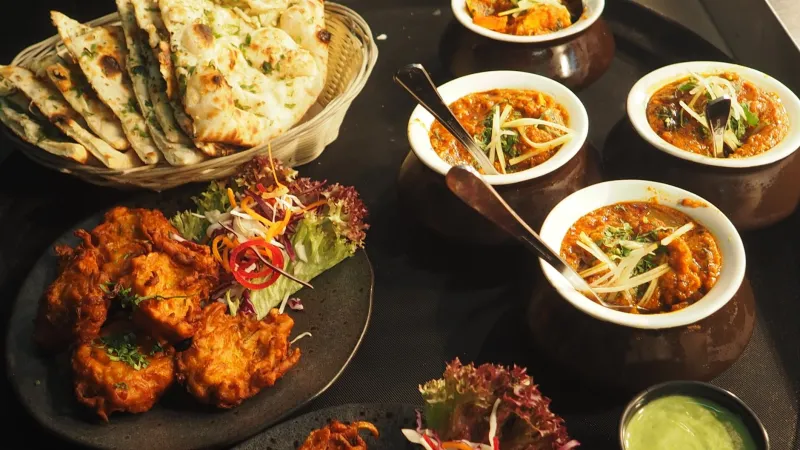
Ask anyone in Britain what their favourite takeaway is. Go on. Nine times out of ten, you'll hear the word curry. Not fish and chips. Not a pizza. Curry. It is woven into the fabric of how we eat, how we socialise, and how we celebrate a Friday night done properly. And yet, if you hopped on a flight to Delhi, Lahore, or Chennai and ordered a chicken tikka masala, you'd likely be met with a polite smile and a very confused kitchen.
Because here's the thing that most of us sort of know but rarely say out loud: British curry isn't really Indian food. Not in any traditional sense. It's something else entirely — a cuisine born from necessity, improvisation, and the very particular tastes of a nation that wanted warmth and spice but also, if we're being honest, a bit of cream and a naan the size of a small duvet.
How It All Started: Post-War Hunger Meets South Asian Ingenuity
The story of the British curry house begins not with a recipe, but with a wave of immigration. After the Second World War, thousands of South Asian men — predominantly from the Sylhet region of what is now Bangladesh, alongside communities from Punjab and Gujarat — arrived in Britain to fill labour shortages. Many found work in the catering trade, and by the 1960s and 70s, curry houses were sprouting up across every major British city.
But here's where it gets interesting. The food they served wasn't a direct transplant of home cooking. Ingredients were scarce, customers were unfamiliar with bold regional flavours, and the goal was survival — financial survival — not culinary authenticity. Dishes were adapted. Spice levels were dialled back. Sauces were made richer, creamier, more palatable to a clientele that had grown up on boiled vegetables and Sunday roasts.
The result was a kind of brilliant culinary compromise. Dishes that carried Indian names but had evolved into something entirely new.
The Balti Myth and the Tikka Masala Legend
Take the balti. If you're from Birmingham, you'll defend it with your life. The Balti Triangle in Sparkhill is a genuine cultural institution — a stretch of restaurants that have been serving these shallow, two-handled wok-cooked dishes since the 1970s. But travel to Pakistan or northern India, and you'll find the word balti simply means bucket. The dish as Brits know it? Invented here. In Birmingham. Full stop.
And then there's chicken tikka masala, arguably the most famous dish in the British food canon. The most widely accepted origin story places its invention in Glasgow, where a Bangladeshi chef reportedly added a tin of tomato soup and some cream to a dry chicken tikka to satisfy a customer who complained his meal was too dry. Whether that's precisely true is debated — food historians love a good argument — but what's not debated is that the dish as we know it doesn't exist in India in any meaningful traditional form.
Former foreign secretary Robin Cook once called it "a true British national dish" in a speech about multiculturalism. He wasn't wrong, but perhaps not in the way he intended.
Why Long-Time Curry House Owners Don't Always Mind
Spend any time talking to the people who've run these restaurants for decades and you get a complicated picture. On one hand, there's pride — enormous pride — in having built something from nothing, in having fed millions of British families, in having changed the way an entire nation eats. On the other, there's a quiet frustration that the food served in their restaurants has sometimes overshadowed the extraordinary depth of actual South Asian cuisines.
Many second and third-generation British-Bangladeshi and British-Indian restaurant owners are now pushing back, opening places that serve regional dishes — Keralan fish curries, Gujarati thalis, Punjabi street food — that their parents never thought a British audience would accept. And increasingly, that audience is ready for it.
But here's what's telling: the old-school curry house still packs out on a Saturday night. The chicken korma still gets ordered. The poppadoms still arrive with that little tray of chutneys before anyone's even looked at a menu.
The Ingredient Problem That Shaped Everything
Part of the reason British curry diverged so dramatically from its roots comes down to something unglamorous: supply chains. In the 1960s and 70s, you simply couldn't get many of the ingredients required for authentic regional Indian cooking in most British towns. Curry powder — a British colonial invention in itself, a pre-blended shortcut that no self-respecting home cook in India would use — became a staple. Tinned tomatoes did heavy lifting. Cream and yoghurt softened everything.
The result was a kind of flattening. The extraordinary regional diversity of South Asian food — the coconut-heavy coastal dishes of the south, the mustard-seed-forward cooking of Bengal, the dry, smoky tandoor traditions of the northwest — got compressed into a relatively narrow set of sauces: korma, tikka masala, madras, vindaloo. A heat spectrum rather than a flavour map.
So Is It Fake? Does That Even Matter?
Here's where Wishi-Washi Eats will plant its flag: no food is truly authentic, and the word itself is often used as a bludgeon rather than a compliment. Every cuisine evolves. Every dish has a history of adaptation, migration, and reinvention. Italian-American food isn't Italian. Japanese ramen has Chinese roots. Tex-Mex would horrify a cook from Oaxaca.
British curry is its own thing. A genuinely original food culture, built by immigrant communities who worked extraordinarily hard to make a living in a country that wasn't always welcoming, feeding people who came to love what they made. That origin story deserves respect, not embarrassment.
What it also deserves is a bit of honest curiosity. If you've only ever eaten tikka masala and korma, you're missing an entire world. The next time you're near a restaurant serving proper regional South Asian food — a Tamil Nadu-style chettinad curry, a slow-cooked nihari, a proper Hyderabadi biryani — try it. You might find that the food which inspired Britain's beloved reinvention is even more extraordinary than the reinvention itself.
And then, on Friday night, order the tikka masala anyway. No one's judging you here.