Stars Mean Nothing at Midnight: The Real Ranking System for British Takeaways
There is no food critic alive whose opinion matters more to you than the lad at work who said, "trust me, the lamb shish from that place on the high street is unreal." That's it. That's the review. You go, you eat, and if he's right — and he usually is — that kebab shop earns a permanent slot in your mental Rolodex of places that will never let you down.
This is how British takeaway culture actually operates. Not through stars, not through tasting menus, and certainly not through someone describing the "textural contrast" of a battered sausage. It runs on word of mouth, on Friday night ritual, on the quiet but total confidence that your local knows exactly what you want before you've even opened your mouth.
The Hierarchy Nobody Wrote Down But Everyone Understands
Ask anyone in Britain to rank their local food spots and they won't hesitate. There's a pecking order, and it's been established through years of field research — most of it conducted after 10pm with varying degrees of sobriety.
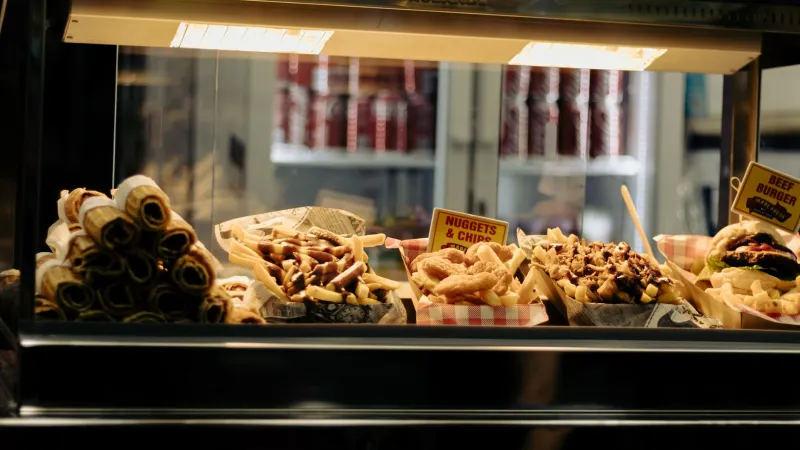
At the very top sits the chippy. Not just any chippy, your chippy. The one where the batter is the right kind of thick, the chips are proper chunky, and the fish has been cooked to order rather than sitting under a heat lamp since half five. A great chippy is a civic institution. People will drive past three others to get to theirs. They will defend it in arguments. They will mourn its closure like a bereavement.
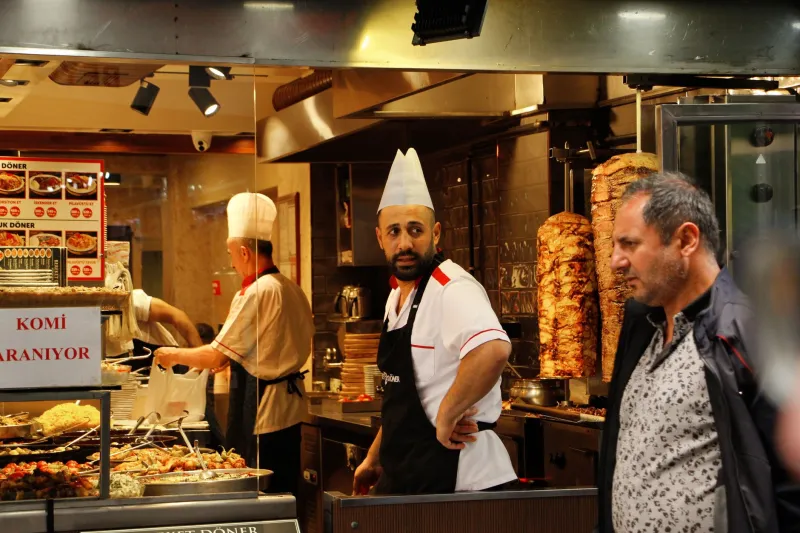
Just below that, trading blows for position depending on the night, sits the kebab shop and the curry house. The kebab shop earns its place through sheer reliability — it's almost always open when everything else isn't, and a good donor or shish at midnight feels like a genuine act of kindness from the universe. The curry house, meanwhile, earns its rank through history. If you've been going to the same place for fifteen years, if the owner knows your usual order, if there's a framed photo of the local football team on the wall — that place isn't just a restaurant. It's part of the neighbourhood's fabric.
The Owner Factor
Here's the thing that no food guide ever accounts for: the person behind the counter is worth at least three stars on their own.
Every town in Britain has a takeaway legend. Maybe it's Mo at the kebab house who's been there since before the current high street was even built, who gives you extra chips when you look tired, and who once stayed open an extra hour because a group of nurses came in after a long shift. Maybe it's the woman at the Chinese who remembers that you don't like spring onions and hasn't needed reminding for six years. Maybe it's the chippy owner who closes early on Christmas Eve but always leaves a note on the door wishing the street a happy Christmas.
These people aren't just running food businesses. They're holding communities together, one portion at a time. And British people — who are famously terrible at expressing gratitude — show their appreciation the only way they know how: by coming back, every single week, without fail.
Why the Dodgy-Looking Place Is Always the Best Place
If you've lived in Britain for more than five minutes, you already know this rule. The scruffier the frontage, the better the food. It's not a guarantee, but the correlation is strong enough to be treated as gospel.
The reasoning is pretty straightforward when you think about it. A takeaway that's been around long enough to look a bit worn-in has survived on the strength of its food alone. It hasn't been propped up by a sleek rebrand or a social media presence. The laminated menu that's been sun-bleached in the window since 2009 is a badge of honour. The plastic chairs that don't quite match are evidence of a place that's never needed to try harder than the food itself.
Contrast that with the shiny new spot that opened six months ago with a neon sign and a QR code menu. It might be brilliant — genuinely, some of them are — but it hasn't earned trust yet. Trust takes time. Trust is built through consistency, through the same quality on a wet Tuesday in January as on a busy Saturday night in August.
Consistency: The One Thing That Actually Matters
If there's a single metric that separates a good takeaway from a great one, it's this: you always know what you're getting.
That sounds like a low bar. It isn't. Consistency is genuinely hard. It means the same cook, or a kitchen that trains people properly. It means not cutting corners when it's busy. It means caring about the hundredth portion of the night as much as the first.
British takeaway culture is built around the comfort of the known quantity. You don't go to your local chippy for a surprise. You go because you want that fish, those chips, that specific combination of salt and vinegar that you've been thinking about since Wednesday. Deviation from the expected is not innovation — it's a betrayal.
This is why people will travel across town for a specific takeaway rather than trying somewhere closer. Distance is irrelevant when you've found a place you can depend on.
The Friday Night Test
If you want to know where a takeaway genuinely sits in the local hierarchy, watch what happens on a Friday night between 10pm and midnight. That's the crucible. That's when the real rankings are decided.
The places with queues out the door? The ones where people are standing on the pavement in the cold, not because there's no other option, but because this is the only option they'd consider? Those are the tier-one establishments. No reservation required. No dress code. No amuse-bouche. Just food that people have made a deliberate choice to travel to, wait for, and eat with their hands on the way home.
No Michelin star has ever meant as much as that queue. No review in a Sunday supplement carries the weight of a packed Friday night chippy with condensation on the windows and the smell of frying drifting halfway down the street.
The Bottom Line
British people don't need a guide to tell them where to eat. They've got something better: years of personal experience, a network of trusted recommendations, and an instinct for quality that no algorithm has managed to replicate.
Your favourite takeaway might not have a website. It might not have a Google rating above 3.8 because someone once left a one-star review about the parking. It might look like it's held together with gaffer tape and optimism. But if it's yours — if you'd choose it over everywhere else on a Friday night when you're tired and hungry and just need something to be right — then it's earned its place at the very top of the only tier list that matters.