Fold, Stuff, Argue: The Great British Wrap Debate Has Been Going On Too Long Without a Verdict
Somewhere between the £3.50 meal deal and the artisan flatbread stall charging a fiver for something with pomegranate seeds in it, the British wrap quietly became one of the most divisive things you can eat for lunch. Not divisive in the way that pineapple on pizza is divisive — that's just a bit of fun. No, the wrap has generated the kind of low-level, persistent disagreement that simmers in office kitchens and street food queues alike. Everyone has an opinion. Almost nobody agrees.
We think it's time to talk about it properly.
How Did We Get Here?
Cast your mind back to the late nineties. The wrap arrived on British shores wearing the clothes of something exotic — a bit Tex-Mex, a bit health-conscious, vaguely American in that way that felt exciting before we all got a bit tired of American food culture. Tortilla wraps started showing up in supermarket fridges alongside sad triangular sandwiches, and suddenly there was a third option. People were intrigued.
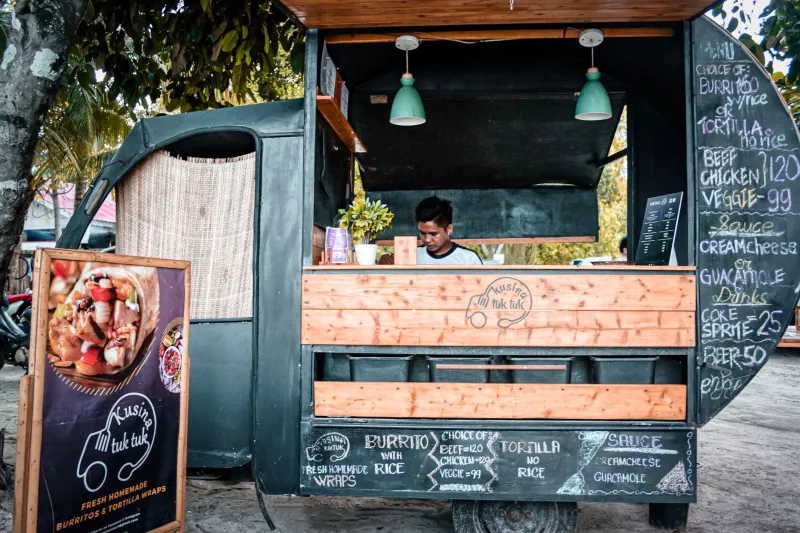
Fast forward to now, and the wrap is absolutely everywhere. Greggs does them. Every petrol station forecourt in the country stocks at least three varieties. Your local market has a bloke selling them out of a converted horse trailer with a hand-painted sign. There are wrap-only fast food concepts opening in city centres. The humble flour tortilla has, without much fanfare, become a cornerstone of British street food and quick-service dining.
And yet — and this is the thing — nobody seems to know what the rules are.
The Soggy Problem Nobody Wants to Admit
Let's get the elephant in the room out of the way: soggy wraps are a genuine crisis, and the food industry has been sweeping it under the rug for years.
You know the one. You grab it from the fridge — chicken tikka, usually, or possibly a BLT — and by the time you've made it back to your desk, the tortilla has absorbed enough moisture to double in weight. It's not a wrap anymore. It's a damp parcel. The structural integrity is gone. You're essentially eating a sad, lukewarm burrito that's given up on itself.
This happens because too many people — whether they're working in a meal deal factory or running a market stall — are building wraps without thinking about moisture management. Wet ingredients go straight onto the tortilla. No barrier. No thought. Just chaos.
Toasting changes everything. A properly pressed or lightly griddled wrap creates a slightly crisp outer layer that holds itself together, adds a bit of flavour, and — crucially — gives you something to grip without it disintegrating. The wrap-toasting debate is one the street food scene has largely resolved in favour of heat, and rightly so. If your wrap is cold and fridge-damp, you've already lost.
The Overstuffing Epidemic
On the other end of the spectrum, we have the overstuffed wrap. This one is particularly common at street food markets, where the unspoken competition seems to be: who can physically fit the most ingredients into a single tortilla before the laws of physics intervene?
Now, look — nobody wants a mean, stingy wrap. A wrap that's all tortilla and a whisper of filling is equally offensive. But there is a point — a specific, identifiable point — at which a wrap becomes uneatable. When you physically cannot close it. When the structural fold at the bottom gives way before you've reached the second bite. When you need two hands, a napkin, and a small amount of courage just to approach it.
A disciplined wrap, one that's been constructed with some thought about balance and portion, is almost always more enjoyable than its overambitious cousin. Restraint is not the enemy of generosity. It's what separates a wrap you can actually eat from one you have to dismantle with a fork.
The Chicken Caesar Wrap: A National Institution, Examined
We cannot have this conversation without addressing the chicken Caesar wrap, which has achieved a kind of mythological status on the British high street that it may or may not deserve.
It is, objectively, everywhere. Every café chain, every supermarket meal deal, every street food market with a grill on it seems to offer some version of the chicken Caesar wrap. It has become the default. The safe choice. The wrap equivalent of ordering a lager when you don't know what else to do.
And honestly? When it's done well, it earns that status. Properly seasoned grilled chicken, cos lettuce with actual crunch to it, decent Caesar dressing that's creamy without being cloying, a few shavings of Parmesan, maybe some crouton crumbs for texture — all of that wrapped up in a warm tortilla is, genuinely, a very good lunch. It works because the flavour profile is balanced and the textures contrast properly.
The problem is that it's rarely done well. More often, you get flabby chicken, limp lettuce, and a Caesar dressing that tastes like it was made mostly of regret and vegetable oil. The gap between the best chicken Caesar wrap you've ever had and the worst is enormous. That gap is the real story.
The Best and Worst Offenders on the British Wrap Scene
Petrol station wraps — specifically the kind that come in vacuum-sealed packaging and have been sitting in a fridge since Tuesday — represent the absolute nadir of wrap culture. They exist. They are technically food. We do not recommend them unless the alternative is nothing.
At the other end, the street food market wrap has genuinely raised the bar in recent years. Operators who care about sourcing, seasoning, and the structural logic of a properly built wrap are turning out genuinely impressive things. Pulled pork with slaw and chipotle mayo. Falafel with harissa and pickled red onion. Korean-style beef with cucumber and sesame. The creativity is real, and when the execution matches the ambition, the wrap absolutely deserves to be taken seriously as a street food format.
Supermarket meal deal wraps sit somewhere in the middle — better than they used to be, occasionally surprisingly decent, but inconsistent in a way that keeps you from fully trusting them.
Does the Wrap Finally Deserve Some Respect?
Here's where we land: yes, actually. The wrap has earned its place at the table — or rather, in the hand, on a street corner, at a market stall, or on a desk at half twelve on a Wednesday.
It's versatile in a way that the sandwich isn't. It travels better than most hot food. It accommodates dietary requirements without making a fuss about it. And when someone genuinely thinks about how to build one — the right tortilla, the right heat, the right balance of filling — it can be a brilliant thing to eat.
The arguments will continue. Soggy vs. toasted. Overstuffed vs. considered. Chicken Caesar vs. literally anything else. That's fine. That's half the fun of British food culture — the low-stakes, high-passion disagreement about things that matter to us in the moment we're hungry.
But let's at least agree on this: a good wrap, properly made, is not a lesser lunch. It's just lunch done right.