The 11am Steak Bake and Other Acts of Glorious British Defiance
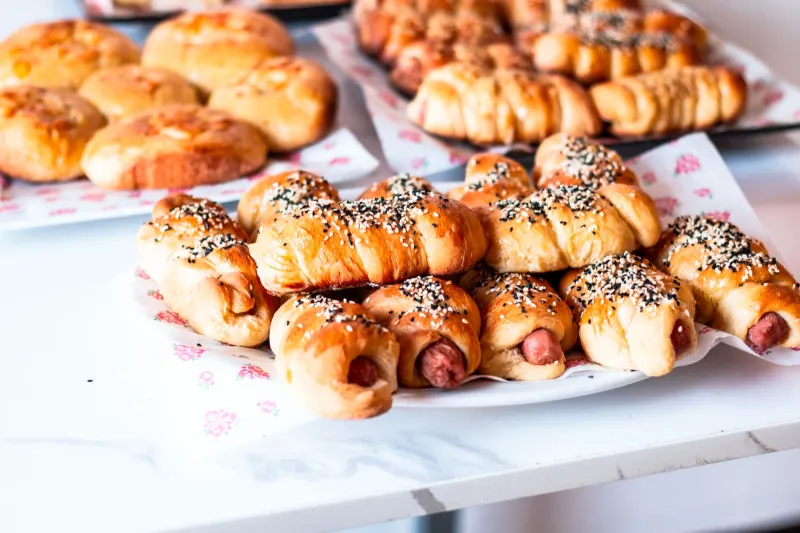
Let's get one thing straight before we go any further. You have, at some point, stood outside a Greggs at eleven o'clock in the morning, steak bake in hand, warm paper bag going slightly translucent with grease, and felt a flicker of something. Not guilt, exactly. More like the mild social anxiety of someone who knows they're doing something that doesn't have a name, and therefore can't quite be defended.
Was it breakfast? Not really — you had a bowl of cereal two hours ago. Was it lunch? Technically no, it's not even noon. Was it a snack? Mate, it's a steak bake. It's a full structural event.
Welcome to the glorious, ungovernable, deeply British world of in-between eating. Neither meal nor snack. Neither here nor there. Wishi-washi, in the most magnificent sense of the word.
The Mealtimes Myth
Somewhere along the line, we got sold the idea that eating is supposed to happen at prescribed intervals. Breakfast, lunch, dinner. Maybe an 'afternoon snack' if you're feeling continental about it. A neat timetable. A structured day.
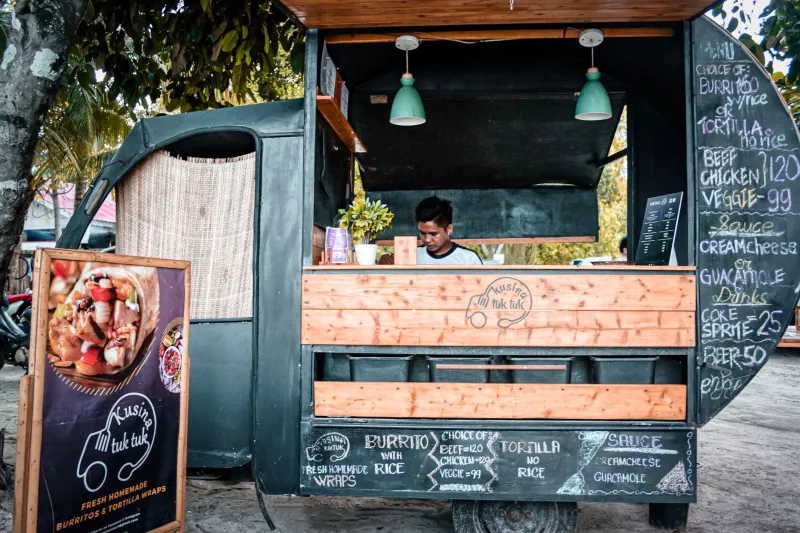
Britain, bless it, has never really bought into this. We eat when the mood takes us, when the smell hits us, when we walk past a market stall and something wrapped in foil looks like it needs to come with us. We are, at heart, an opportunistic eating nation — and the street food scene knows it better than anyone.
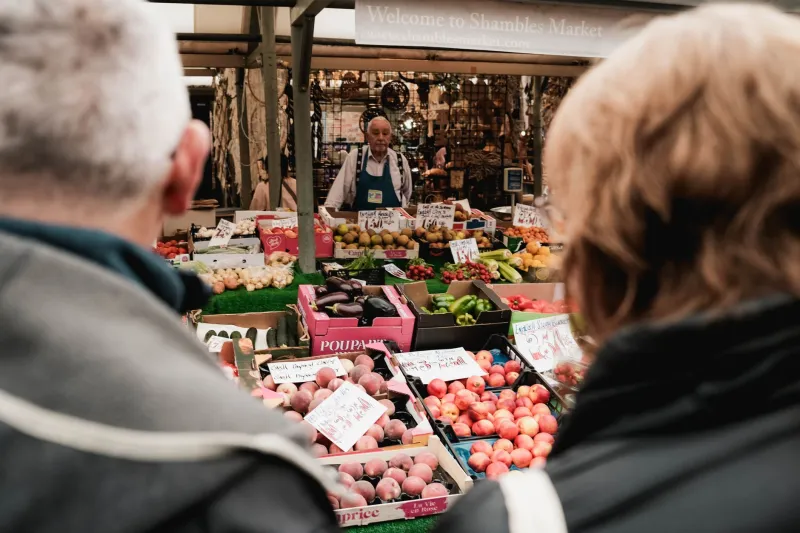
Speak to traders at any decent food market and they'll tell you the same thing: the busiest window isn't noon, it's the murky no-man's-land between half ten and twelve. "We do more trade between eleven and half eleven than we do at actual lunchtime some days," says one trader at a covered market in Leeds who's been selling salt beef rolls and pickle-stacked sandwiches for going on six years. "People aren't waiting for permission. They're hungry, they walk past, that's it."
At a street food pitch in Bristol's Tobacco Factory market, a vendor selling loaded bánh mì says something similar. "Saturday mornings are chaos. People have been wandering round since nine, they've had a coffee, and by half ten they're absolutely ready for something proper. They're not calling it lunch. They're just eating."
The Scotch Egg Problem
If there is one food that perfectly embodies the in-between condition, it is the scotch egg. Specifically, a scotch egg consumed in a pub car park, or balanced on the bonnet of a car at a farmers' market, or unwrapped from a paper bag while sitting on a low wall somewhere.
Is it a starter? In a restaurant, yes. Is it a snack? In a packet from a service station, arguably. Is it a meal? When it's a proper hand-raised one from a deli counter with a still-runny yolk and a thick coat of herby sausage meat — honestly, it's doing a lot of heavy lifting.
The scotch egg doesn't care what time it is. It doesn't care whether you've eaten already or whether you're planning to eat again in an hour. It simply exists, offering itself to you, and you either take it or you don't. That's its whole philosophy.
This is also, more or less, the philosophy of in-between eating itself.
4pm Chips and the Dignity of the Afternoon Hunger
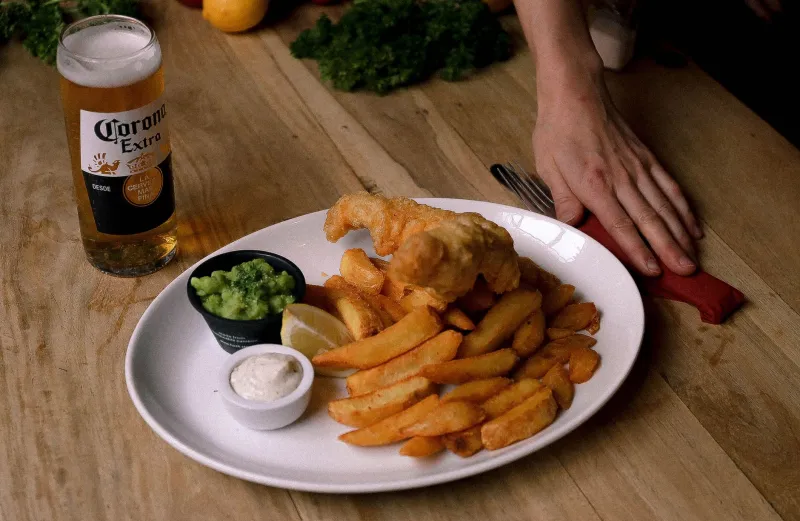
There is a specific and very British hunger that arrives at around four in the afternoon. It is not a polite hunger. It does not suggest a light snack or a piece of fruit. It wants chips. Specifically, it wants chips from a chip shop, in a paper cone or a polystyrene tray, eaten while walking, ideally with far too much salt and a squirt of vinegar that slightly stings if it gets on a paper cut.
This hunger is not accounted for in any official meal structure. It arrives too late to be lunch and too early to be dinner. It is the hunger of a person who had lunch at one and won't eat again until seven, and who is currently standing in front of a chip shop at four fifteen feeling completely justified.
And they are justified. That's the thing. The 4pm chip run is one of the most honest food experiences available in this country — no pretension, no ceremony, just hot potato and fat and salt and the particular satisfaction of eating something with your hands while standing up.
Street food vendors in seaside towns will tell you that their entire business model is essentially built on this window. "We don't really do lunch rushes the way people imagine," says one vendor at a coastal market in North Yorkshire. "It's constant. It's people wandering, people between things, people who are sort of hungry but not ready to commit to sitting down somewhere. That's our customer."
Britain's Real Relationship with Food
Here's the thing that all of this points to: the official British meal structure has always been a bit of a polite fiction. We have a long and genuine tradition of eating that doesn't fit the three-meals-a-day framework — elevenses, afternoon tea, supper, the post-pub kebab, the pre-match pie, the half-time Bovril. We have always eaten around the edges of mealtimes, in the margins, in transit, between things.
Street food and market culture didn't create this habit. It just finally gave it the respect it deserved. When you've got a world-class jerk chicken wrap or a proper pulled pork bun available at half past ten on a Saturday, you don't need to wait for the clock to say noon before you can eat it with your full chest.
In-between eating isn't chaotic or undisciplined. It's responsive. It's honest. It's the acknowledgement that hunger doesn't keep to a schedule, that good food should be available when you actually want it, and that some of the best eating in this country happens in the gaps — on a wall, out of a paper bag, walking between one place and another, not quite at mealtime, not quite at snack time, somewhere in the wonderfully wishi-washi middle.
Eat When You're Hungry. Eat What Looks Good.
If you need a manifesto for the in-between eating life, it's probably something like this: the steak bake does not need a reason. The 4pm chips are not a moral failing. The scotch egg in the car park is a completely valid choice made by a reasonable adult.
Britain's food culture is at its absolute best when it's casual, accessible, and unapologetic — and nowhere is that more true than in the glorious no-man's-land between meals. The street food traders know it, the market vendors know it, and honestly, somewhere deep down, you've always known it too.
So next time you find yourself outside a Greggs at eleven, or eyeing up a chip shop at quarter past four, or accepting a scotch egg from someone's cool bag in a pub garden — don't explain yourself. Don't apologise. Don't call it a 'cheeky snack' or a 'naughty treat' as if you've done something wrong.
You're just eating. And it's brilliant.