Three Items, Infinite Opinions: Inside Britain's Meal Deal Obsession
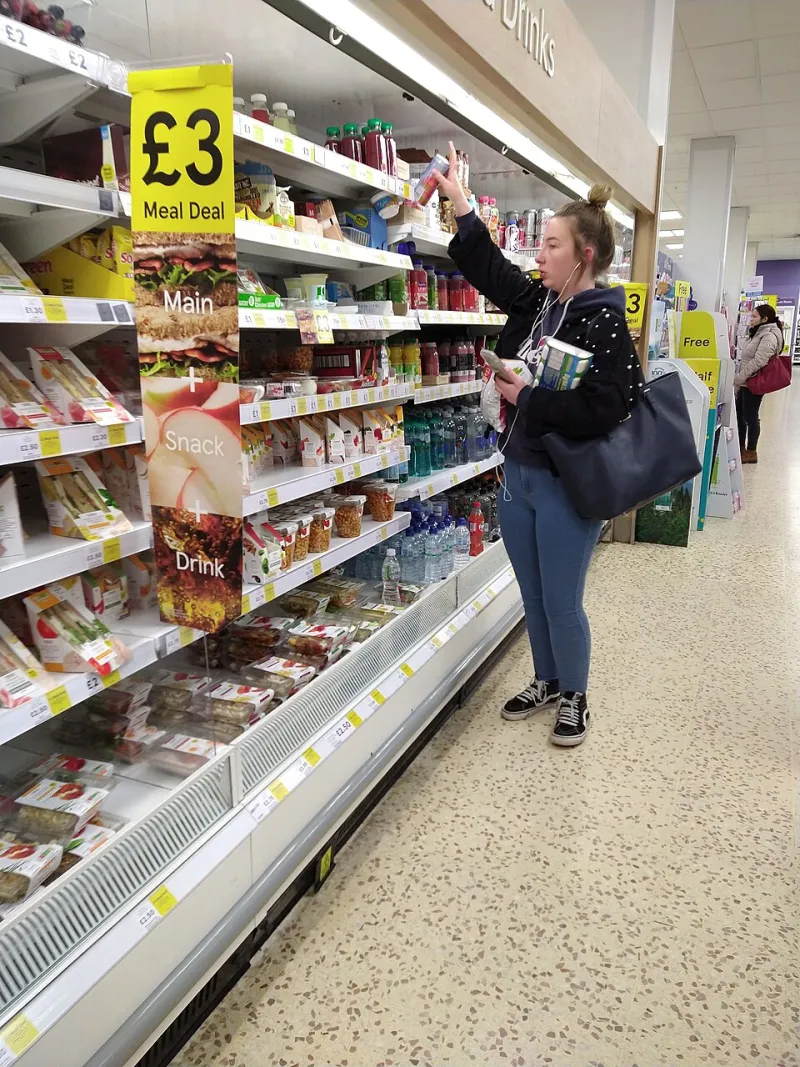
Photo: Philafrenzy, CC BY-SA 4.0, via Wikimedia Commons
At 12:47 on a Tuesday, there is a queue forming outside the Tesco Express on Bishopsgate. It snakes past the energy drinks fridge, curls around the reduced pastries, and terminates somewhere near the self-checkout machines. Nobody in this queue looks particularly excited. And yet, every single person in it is about to make a decision they have probably been thinking about since approximately 10:30am.
This is the meal deal queue. And it is, in its own understated way, one of the great British institutions.
How a Supermarket Promo Became a National Ritual
The meal deal — a sandwich, a snack, and a drink, bundled together for a price that sits somewhere between 'bargain' and 'morally questionable' depending on what you pick — has become the default British lunch in a way that feels almost inevitable in retrospect. Boots started it in the 1980s. Supermarkets ran with it. And now, somewhere in the region of four million meal deals are sold every single day across the UK.
Four million. Daily.
To put that into context, that's more meal deals than there are people in New Zealand, consumed in a single working day, largely eaten at desks, on park benches, or standing over a kitchen sink pretending that counts as a lunch break.
"I've been doing the same Sainsbury's meal deal for about six years," says Priya, 34, who works in HR for a logistics firm in Leeds. "BLT on malted bread, Kettle Chips sea salt, Diet Coke. Every single day. My colleagues think it's boring. I think it's efficient."
There's something in that word — efficient — that gets to the heart of why the meal deal works so well in Britain. We are not, as a nation, known for long leisurely lunches. We eat at our desks. We eat walking back from the shop. We eat in seventeen minutes before a Teams call. The meal deal fits that rhythm perfectly. It's pre-decided. It's contained. It requires minimal thought from a brain that is already full of spreadsheets.
The Psychology of the Holy Trinity
Ask anyone who does a regular meal deal and they'll tell you: the sandwich is the anchor, the snack is the personality, and the drink is the wildcard.
The sandwich choice is largely practical. You know what you like, you know what your body needs, and you've long since made peace with the fact that the 'handmade' labelling is doing a lot of heavy lifting. Chicken caesar wrap. Tuna mayo on white. The egg and cress that nobody admits to loving but somehow keeps selling out.
But the snack? That's where character comes in.
"The snack is where you get to express yourself," says Marcus, 28, a graphic designer in Manchester. "Like, if someone picks a bag of McCoy's over a packet of Walkers, you already know something about them. And if they pick a Nakd bar, they're either genuinely health-conscious or they're trying to convince themselves they are."
The drink, meanwhile, has become its own battlefield. The rise of premium soft drinks — Fever-Tree, Belvoir, those fancy sparkling waters with pictures of mountains on them — has added a layer of aspiration to what used to be a simple choice between Coke and orange juice. Several office workers we spoke to admitted to choosing the most expensive drink in the deal as a way of 'maximising value', which is both economically sound and deeply relatable.
Tesco vs Sainsbury's: A Genuine Divide
Ask someone which supermarket does the best meal deal and prepare yourself. This is not a casual question. This is a question that reveals allegiances, preferences, and occasionally unresolved childhood feelings.
Tesco loyalists tend to cite range and consistency. The Tesco meal deal is extensive, reliable, and widely available, which matters enormously when you're in a rush. Sainsbury's fans, however, argue that the quality is noticeably better — the sandwiches feel slightly more considered, the snack selection leans a touch more interesting.
"Sainsbury's just hits different," says Kezia, 31, a project manager in Bristol. "The bread feels less like it's been laminated. I can't explain it more scientifically than that."
Marks & Spencer occupies a different tier entirely — the aspirational meal deal, the one you buy when you want to feel like you're treating yourself without actually spending restaurant money. The sandwiches are genuinely good. The snacks are occasionally baffling (a mini Colin the Caterpillar cake is technically a snack, M&S, but we're choosing to respect the decision). And there is a specific type of person who will walk past three other supermarkets to get to an M&S Simply Food, and they know exactly who they are.
Regional Peculiarities and Honest Confessions
The meal deal is not uniform across the UK, and the regional variations are more interesting than you might expect. In Scotland, Greggs fills much of the role that supermarket meal deals play further south — a hot sausage roll and a coffee is, functionally, a meal deal even if nobody calls it that. In Northern Ireland, Centra and Spar dominate the lunchtime run in ways that feel culturally distinct from the Tesco-Sainsbury's duopoly of English cities.
In London, the sheer density of options means the meal deal competes with everything from Pret a Manger to Turkish street food to that one bloke who sells samosas from a cool box near Farringdon station. And yet the meal deal persists, because at 1pm when you have twenty minutes and a budget, it wins on logic every time.
"I feel a bit guilty sometimes," admits Dan, 42, a teacher in Birmingham who meal deals on his lunch supervision days. "Like I should be eating something more interesting. But also — it's £3.50 and it fills me up and I don't have to think about it. That's the whole point."
And that, honestly, is the whole point. The meal deal is not trying to be exciting. It's not trying to be Instagram content. It's trying to get you through the afternoon without your blood sugar crashing before the three o'clock meeting. In that sense, it is a masterpiece of functional design.
The Packed Lunch Never Had a Chance
There's a nostalgic argument to be made for the packed lunch — the thermos flask, the cling-filmed sandwich, the slightly warm yoghurt that's been in your bag since 8am. But the packed lunch requires planning, preparation, and a level of morning organisation that most working adults simply cannot sustain five days a week, fifty-two weeks a year.
The meal deal asks nothing of you the night before. It only asks that you show up, queue politely, and choose wisely. Britain, it turns out, is very good at that.
So here's to the meal deal industrial complex — unglamorous, wildly popular, and quietly, stubbornly essential to the rhythm of British working life. Choose your snack with care. It says more about you than you think.