One Free Biryani and a Lifetime of Loyalty: The Takeaway Card Economy That Apps Can't Touch
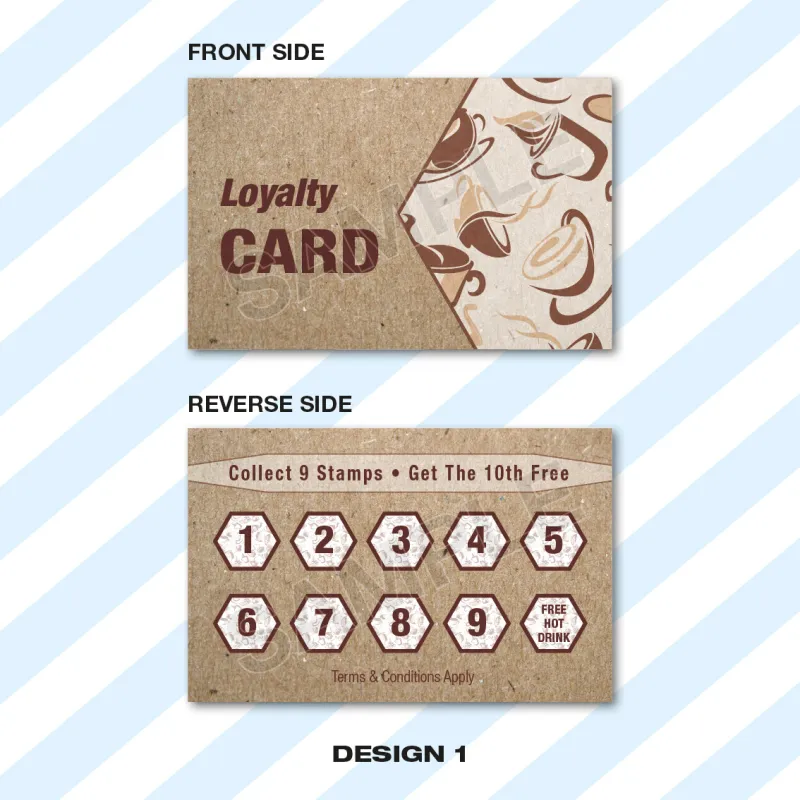
Photo: curry house takeaway loyalty stamp card Indian restaurant Britain, via i.ebayimg.com
Somewhere in a kitchen drawer near you — probably behind the takeaway menus you haven't thrown away since 2019 — there's a small card. It might be laminated. It might be a torn rectangle of cardstock with a rubber stamp impression on it that's slightly smudged because the ink pad was running low. It has your name on it, written in biro by someone who remembered how to spell it without asking twice. And it represents something no loyalty app has ever managed to replicate: the feeling that a business actually gives a toss about you coming back.
Britain's curry houses, kebab shops, and independent takeaways have been running their own informal reward economies for decades. Long before Nectar points. Long before QR codes and push notifications. Long before some startup decided that "gamifying" your dinner was a good idea. These places built loyalty the old-fashioned way — by being decent to people, keeping track of who came back, and occasionally giving them a free dish when it felt right.
The Card in Your Wallet You Actually Trust
Ask anyone who has a loyalty card from a local takeaway whether they trust it, and they'll almost certainly say yes. Ask them whether they trust the app from a national chain restaurant, and watch the hesitation creep in.
There's a reason for that. The handwritten card operates on something that no points scheme has successfully bottled: personal accountability. When the owner of your local Indian restaurant stamps your card, there's a face attached to that transaction. A name. A relationship that's been built over years of Friday nights and post-pub orders. The card isn't a contract enforced by terms and conditions — it's a promise made between two people who know each other.
Chain restaurant loyalty programmes, by contrast, are built on the opposite principle. They're designed to feel personal while being entirely impersonal. They remember your birthday but forget your order. They offer you points that expire before you've accumulated enough to matter. They change the terms quietly, in an email you didn't open, and then act surprised when you feel cheated.
The Mechanics of Informal Loyalty
The actual structure of these schemes varies wildly, which is part of their charm. Some curry houses operate on a pure stamp-per-visit basis — ten stamps and you get a free main course. Others track spending more loosely, with the owner simply knowing that you're a regular and reflecting that in the occasional free naan or a portion of rice that wasn't on the bill. Some places operate what you might call a relationship discount — a standing reduction for customers who've been coming for years, never advertised, just applied quietly.
Then there are the hybrid systems. Takeaways that use WhatsApp groups to notify regulars of specials. Shops that keep a running tab in a notebook by the till, more like a village pub than a restaurant. One kebab shop owner in Sheffield described to us how he keeps a mental note of which customers always order extra chilli sauce and makes sure it's already in the bag before they ask. That's not a loyalty programme. That's just paying attention.
What the Big Chains Keep Getting Wrong
The irony is that chain restaurants spend enormous amounts of money trying to replicate exactly this feeling, and they consistently fail. They hire consultants. They build apps. They create tiered membership structures with names like "Gold" and "Platinum" that are supposed to make you feel valued. And yet the average British consumer trusts a slightly grubby stamp card from their local more than they trust any of it.
Part of the problem is that chain loyalty schemes are fundamentally transactional in a way that feels cynical. They're not rewarding you for being a loyal customer — they're incentivising repeat purchases as a business metric. The distinction matters. When your local curry house gives you a free biryani, it's because they're glad you keep coming back. When a chain restaurant gives you a free coffee after nine purchases, it's because their data model says that's the most cost-effective way to retain your spend.
People feel the difference, even if they can't articulate it.
The Currency of Goodwill
What independent takeaways have actually created is a parallel economy built on goodwill rather than points. And goodwill, it turns out, compounds in ways that no algorithm has managed to model.
A customer who feels genuinely valued by their local doesn't just return more often — they recommend the place to friends, defend it in online reviews, and forgive the occasional off night in a way they'd never extend to a chain. They become advocates. They bring people in on their first visit to a city. They tell the story of the free biryani at dinner parties. They are, in the truest sense, loyal — not because of a points balance, but because of a relationship.
This is the thing that still baffles the restaurant industry's corporate end. Loyalty isn't a metric. It's an emotion. And you can't manufacture it with an app update.
What Actually Keeps People Coming Back
We spoke to a handful of regulars at independent takeaways across the Midlands and the North, and the answers were remarkably consistent. Nobody mentioned the free dish first. They mentioned being remembered. They mentioned the owner knowing their usual order. They mentioned being told when something was off the menu before they'd even asked, saving them the disappointment. The free biryani was almost an afterthought — a nice bonus that confirmed what they already felt.
That's the real insight here. The stamp card isn't the loyalty scheme. It's the symbol of one. The actual scheme is everything that surrounds it: the consistency, the familiarity, the sense that this place knows you exist as a human being rather than a customer profile.
Chain restaurants could theoretically do all of this. They have the data. They have the technology. What they don't have — and what can't be bought or built — is the genuine desire to make a single individual feel like they matter.
Your local curry house has that. It's why you still have the card.