Beans, Bacon, and No Apologies: The Enduring Defiance of the British Caff
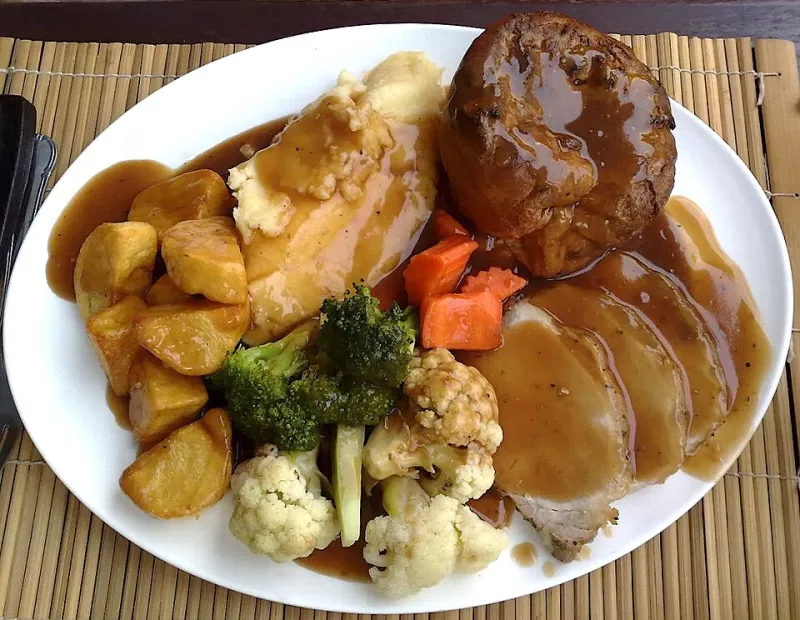
Photo: Jeff McNeill, CC BY-SA 2.0, via Wikimedia Commons
Somewhere in London, a restaurant has just launched a 'deconstructed full English' for £22. The egg is poached. The bacon is artisanal. The beans have been replaced with something involving tomato confit and micro herbs. The toast is sourdough, obviously.
Meanwhile, three miles away, Sandra has been running the same café on the same high street since 1987. Her full English costs £7.50. The eggs are fried in the same pan they've always been fried in. The beans come from a tin. The toast comes from a white loaf that nobody is pretending is artisanal. And at 8:30 on a Wednesday morning, every single seat is taken.
This is not a coincidence.
The Caff as Cultural Constant
The British café — the caff, the greasy spoon, the transport café, the workman's, call it what you like — is one of the most quietly resilient institutions in British food culture. It has survived the health food boom of the nineties, the artisan coffee revolution of the noughties, the avocado toast years, the fermented everything phase, and approximately forty thousand news articles explaining why brunch has 'changed everything'.
It has survived all of this by doing precisely nothing differently.
That's not laziness. That's a very specific kind of confidence — the confidence of something that knows exactly what it is and exactly who it's for, and has absolutely no interest in your opinion about whether the sausages should be Cumberland or the mushrooms should be wild.
"I had a food writer come in once," says Terry, who has owned a café in Wolverhampton for eighteen years. "Nice bloke. He suggested I might want to think about the provenance of my bacon. I told him the provenance was the butcher down the road, same as it's always been. He wrote something nice about us anyway. But I wasn't going to change anything."
What Actually Goes on a Proper Plate
The full English breakfast is, depending on who you ask, either a perfectly calibrated combination of protein, fat, and carbohydrate, or an act of cheerful defiance against nutritional common sense. Both of these things can be true simultaneously.
The components are well-established: bacon (back, not streaky, in most British caffs, though this is contested), eggs (fried, scrambled, or poached depending on the establishment and your own preferences), sausages (pork, thick, not the thin breakfast variety that belong in a hotel buffet), baked beans, grilled tomato, mushrooms, and toast. Black pudding is optional but welcomed. Hash browns exist in a kind of constitutional grey area — technically not traditional, but now so embedded in the British caff experience that removing them would cause genuine upset.
The ordering ritual is its own performance. You don't browse at a caff. You know what you want, or you look at the laminated menu for exactly thirty seconds and then order the full English anyway. The staff take your order with the economy of people who have heard 'full English, white toast, tea with two sugars' approximately ten thousand times and are entirely at peace with that.
"People think it's boring that everyone orders the same thing," says Diane, who runs a café in Stockport that's been in her family since the 1970s. "I think it's lovely. It means they know what they want. They're not coming here to be surprised. They're coming here because it's right."
Why the Gastropub Brunch Will Never Win
Every gastropub brunch menu in Britain contains a version of the full English that costs between £14 and £18, comes with a heritage breed sausage, and is served on a wooden board with a small jar of house-made ketchup. It is, in isolation, often genuinely good. And it will never, ever replace the caff breakfast in the hearts of the people who really care about this.
The reason is not simply price, though price matters. It's something more fundamental about atmosphere and function. The gastropub brunch is an event. You book it. You dress for it slightly. You take a photo. You linger over it for an hour and a half while discussing weekend plans.
The caff breakfast is not an event. It's a refuelling. It's what you have before a long drive, or after an early shift, or because you couldn't face making anything at home and you needed something warm and substantial and completely without pretension. The caff doesn't ask anything of you. The gastropub, however subtly, always does.
"I went to one of those trendy brunch places with my daughter," admits Ron, 67, a retired electrician who visits his local caff in Norwich four mornings a week. "It was nice enough. But I was thinking about where I'd rather be the whole time. It's like the difference between a comfortable chair and a chair that's been designed to look like a comfortable chair."
The Tourist Confusion Problem
No discussion of the British fry-up is complete without acknowledging the bewilderment it generates in visitors from abroad. The beans, specifically, cause the most distress. Continental Europeans tend to regard beans on toast as a cry for help rather than a breakfast option. Americans are confused by the absence of pancakes and maple syrup. Australians, to their credit, tend to adapt immediately and enthusiastically.
But the tourists who do lean in — who sit down in a proper caff and commit to the full experience — often describe it as one of the most genuinely British things they've encountered. Not because it's traditional in a museum sense, but because it's real. It's being eaten by real people for real reasons in a real place that hasn't been sanitised for consumption.
"I had a couple from Japan in last month," says Sandra, back in her London café, wiping down the counter between orders. "They had the full English. They took photos, but they also actually ate it. Every bit. They came back the next day as well. I think that's the highest possible compliment."
The Secret to Not Changing
There's a version of this story where the caff is presented as a relic — a charming survivor from a simpler time, doomed eventually to be replaced by something sleeker and more photogenic. That version is wrong, or at least it's been wrong for the last forty years running.
The greasy spoon endures not despite its refusal to modernise, but because of it. In a food culture that is constantly reinventing itself, constantly chasing the next thing, there is enormous value in the place that simply does what it does, does it well, and asks no questions.
The full English is not going anywhere. The beans are staying on the plate. The toast will continue to be white, slightly over-buttered, and cut diagonally if you're lucky. And Sandra will be here at seven tomorrow morning, same as always, with the same menu and the same full tables.
Some things don't need fixing. Some things just need a good frying pan and the confidence to mean it.