The 3pm Hunger Gap: Britain's Most Productive Eating Window Nobody Talks About
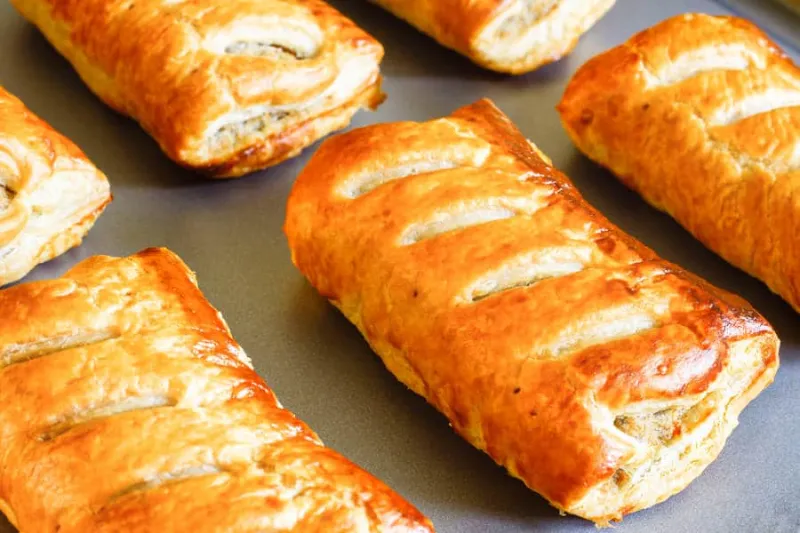
Photo: afternoon snack sausage roll pasty UK office worker, via travellemming.com
Lunch was two hours ago. Dinner is three hours away. Your concentration has dipped, your chair has become a mild enemy, and somewhere in the back of your mind a sausage roll is making a compelling case for itself. This is the 3pm hunger gap, and Britain has been quietly mastering it for decades.
It doesn't get the attention of the breakfast rush or the lunchtime surge. Nobody writes trend pieces about the mid-afternoon snack the way they do about brunch culture or late-night street food. But the 3pm window sustains a significant and underappreciated slice of Britain's food economy — and the people who've figured this out are doing very well indeed.
The Physiology of the Afternoon Crash
There's a reason 3pm hits like a wall. Blood sugar drops in the early afternoon regardless of what you ate at lunch, and the post-midday dip in alertness is a documented physiological phenomenon rather than a personal failing. Your body is genuinely asking for something, and the British workforce has developed a set of culturally specific answers.
Unlike the Spanish siesta model or the Nordic fika tradition — both of which involve some formal acknowledgement that mid-afternoon needs addressing — Britain's approach is more improvisational. We don't build it into the working day officially. We just make it happen anyway, through a series of small, tactical decisions that, taken together, constitute a surprisingly sophisticated feeding culture.
The tea round is the original infrastructure. But it's been joined by something more substantial.
What's Actually Getting Eaten
Ask anyone who works near a Greggs, a bakery, a petrol station with a decent pasty warmer, or a van that parks up at the same spot every weekday at half two, and they'll give you a consistent answer: sausage rolls, pasties, slices of pizza, sausage baps, the occasional hot dog, and whatever the vending machine in the corridor has been quietly hoarding since January.
The pasty deserves particular attention here. In the West Country it's almost ceremonial — the 3pm pasty is a meal in its own right, eaten with the seriousness it warrants. But the pasty has spread. You'll find it eaten at 3pm in Birmingham, in Glasgow, in Leeds, in the industrial estates of Swindon. It travels well, it's filling without being overwhelming, and it requires no cutlery, no plate, and no real pause in whatever you were doing before.
Sausage rolls occupy a similar position. The Greggs sausage roll has essentially become a unit of cultural currency — its price point is referenced in discussions about the cost of living, its availability is near-universal, and its consumption peaks in that mid-afternoon window when the morning's pastry has worn off and dinner feels like a distant rumour.
Drive-thrus have also colonised this window. The afternoon run to McDonald's, KFC, or whatever the local option is — often framed as 'just getting a drink' but rarely ending at just a drink — has become a standard feature of the British working afternoon. The drive-thru is ideal for the 3pm mission: quick, private, no queue inside an office kitchen, and you can eat in the car park and be back at your desk before anyone's noticed you've gone.
The Office Politics of the Afternoon Snack
There's a whole social layer to this that doesn't get examined enough. The 3pm snack run is rarely a solo operation, and the unwritten rules around it are elaborate.
Someone has to be the one to say it. "I'm going to Greggs, does anyone want anything?" is a statement that carries social weight. It establishes you as generous, as attuned to the group's needs, as someone who reads the room. The person who makes this offer regularly acquires a kind of informal status — they become the office food ambassador, and people like them more than the job title warrants.
The reciprocity is expected but never explicitly discussed. If someone fetches your sausage roll today, you're on the hook for the next run. Failing to reciprocate within a reasonable timeframe is noted. It won't be mentioned. But it's noted.
There's also the question of what you bring back for yourself versus what you bring for others. Returning with a large latte and a slice of chocolate cake while handing your colleagues a plain cheese roll each is a social miscalculation. The snack run is a communal act. Treat it accordingly.
How It Varies Across Britain
The 3pm economy looks different depending on where you are and what kind of work you're doing.
On construction sites and industrial estates, the afternoon break is more formalised — there's often a specific time, a specific van, and a specific order that's been the same for months. The site's tea van is a micro-institution, and the relationship between the crew and the person running it is built on reliability and repetition. Change the menu without warning and you will hear about it.
In offices, particularly open-plan ones, the snack culture is more fluid and slightly more self-conscious. People are more likely to eat quietly at their desks, slightly guiltily, having returned from a solo mission to the nearest food outlet. The communal snack run exists, but so does the private pasty, consumed with the bag folded discreetly on the lap.
In the North of England, the afternoon snack leans heavier — a proper filled roll, a pie, something with substance. In London, the options multiply and the price points rise accordingly, but the behaviour is the same. In Scotland, the afternoon snack culture is its own thing entirely, with bakeries playing a central role and the filled roll achieving an almost sacred status.
What the Food Industry Has Figured Out
The businesses that have paid attention to the 3pm window are doing well because of it. Greggs extended its range of hot savoury products partly because the data showed afternoon purchasing patterns that didn't match the traditional 'lunch' model. Drive-thrus introduced afternoon deals. Street food traders who set up in business parks and industrial areas at 2pm rather than noon have found a significantly less saturated market.
The 3pm economy isn't an afterthought. It's a genuine feeding occasion with its own logic, its own products, and its own social rituals. It's just that nobody's built a marketing campaign around it, because the people eating at 3pm aren't performing it for anyone — they're just hungry, they've got twenty minutes, and they know exactly what they want.
Which is, honestly, the best possible relationship anyone can have with their food.