Don't Open the Box Yet: What the Packaging Tells You Before the First Slice
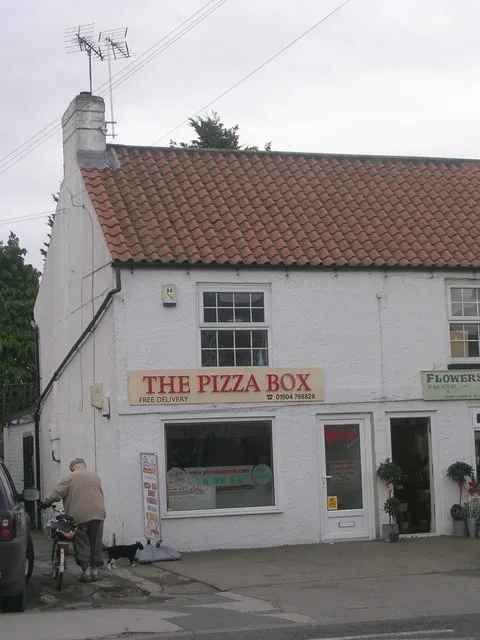
Photo: Betty Longbottom , CC BY-SA 2.0, via Wikimedia Commons
Here's a skill nobody teaches you but everyone eventually develops: the ability to assess a pizza takeaway before you've touched a single slice. Not by reading reviews, not by checking hygiene ratings (though do that too, obviously), but by studying the box. The actual cardboard container sitting in front of you is a document. It contains information. You just need to know how to read it.
This isn't pure whimsy. Packaging tells you things about process, care, temperature management, and whether the people making your food are paying attention. A bad box is rarely a coincidence.
The Grease Map: Your First Piece of Evidence
Lift the box. Turn it over — carefully. Now look at the base. What you're looking at is a grease map, and it has a story to tell.
A thin, even distribution of oil across the bottom? That's generally fine. Pizza has fat in it; fat migrates downward; some transfer to the box is expected and normal. This is not a red flag. This is physics.
What you're watching for is the pattern. A large, concentrated grease bloom in the centre of the box suggests the pizza has been sitting for a while before dispatch — the oil has pooled rather than spread, which means your food has been waiting on a warm surface, slowly weeping. Not ideal.
Multiple distinct patches, particularly near the edges? The toppings have been slipping around in transit. Either the box was tilted at some point (possible but not great), or there was so much topping loaded on that nothing was anchored properly. This can go either way — generous topping distribution is a virtue, but if it's all migrated to one corner, the structural integrity of your pizza was compromised before it left the shop.
No grease at all? Suspicious. Either the cheese was applied with extraordinary restraint, or you're dealing with a frozen base that doesn't behave like fresh dough. Proper pizza leaves a mark. A completely dry box base is a flag worth noting.
Box Construction: The Infrastructure Test
Not all pizza boxes are created equal, and the box a takeaway chooses says something about how seriously they're taking the operation.
A flimsy, single-ply box that's already bowing under the weight of the pizza is a warning. Good pizza is heavy. Proper dough, real cheese, actual toppings — it adds up. A box that can't support its own contents was chosen because it was cheap, and that decision tells you something about the priorities of whoever ordered it.
Look at the corners. Are they folded cleanly and locked? Or are they already separating, held together by hope? A collapsing corner means the pizza has been shifting in transit, which means your slices are probably already overlapping and your toppings have redistributed themselves into chaos.
The ventilation holes on the top of the box are also worth a glance. These exist to let steam escape rather than condense back onto the pizza and make the base soggy. If your box has no vent holes, or they've been blocked (sometimes by a sticker, sometimes by careless stacking), the pizza inside has been slowly steaming itself into limpness. A thoughtful operation pays attention to this. A careless one doesn't.
The Handover: How It's Given Tells You How It Was Made
Pay attention when the driver or counter staff hands the box over. This sounds unnecessarily theatrical, but hear us out.
A pizza handed over flat and level, with some care taken not to tilt it, suggests a habit of treating the product properly. It means someone, at some point, was told — or figured out — that pizza is a horizontal food and should be transported as such.
A pizza handed over at an angle, shoved into a bag, or balanced on top of a drinks carrier while the driver juggles their phone and a receipt? Your toppings are now on one side of the box. The cheese has made a decision about where it wants to be, and that decision was not yours to make.
This isn't about demanding white-glove service. It's about whether the people handling your food care enough about it to carry it correctly. It's a small thing. It's also not a small thing.
The Smell Test (Yes, Really)
Before you open the box, give it a moment. A genuinely good pizza will announce itself through the cardboard — a warm, slightly yeasty, cheesy smell that's recognisable and appetising. If you have to press your nose to the box to detect anything, the pizza inside is either under-seasoned, under-cooked, or has been sitting long enough for the aromatics to fade.
A strong smell of burnt cardboard is a separate problem entirely and suggests the oven temperature was too high or the pizza was left in too long. Not always a disaster for the taste, but worth noting.
Opening the Lid: Confirmation, Not Discovery
By the time you actually open the box, you should already have a working theory about what you're going to find. The grease map, the box condition, the handover, the smell — these have all been feeding you information. The lid reveal is just confirmation.
A pizza that's slid to one side, a cheese layer that's congealed into a solid sheet, toppings distributed with the randomness of a scatter cushion thrown down a flight of stairs — none of this should be a surprise if you've been paying attention.
Conversely, a pizza that arrives centred, with the cheese still pulling, the crust holding its structure, and the toppings sitting where they were placed by someone who meant it — that's the result of a kitchen that's in control of what it's doing. The box told you before the box was opened.
The Bigger Picture
None of this is about being precious. It's not about demanding perfection from a tenner's worth of takeaway on a Wednesday evening. Most pizza shops are run by people working hard in hot kitchens, and most of them are doing their best.
But the box is a proxy for the whole operation. The choices made about packaging, about transit, about how food is handled on its way out the door — these reflect the same choices made about ingredients, about cooking times, about whether someone tasted the sauce before it went on three hundred bases that day.
Read the box. It's been trying to tell you something the whole time.