The Frozen Takeaway Lie: What the Box Promises vs. What Your Oven Actually Delivers
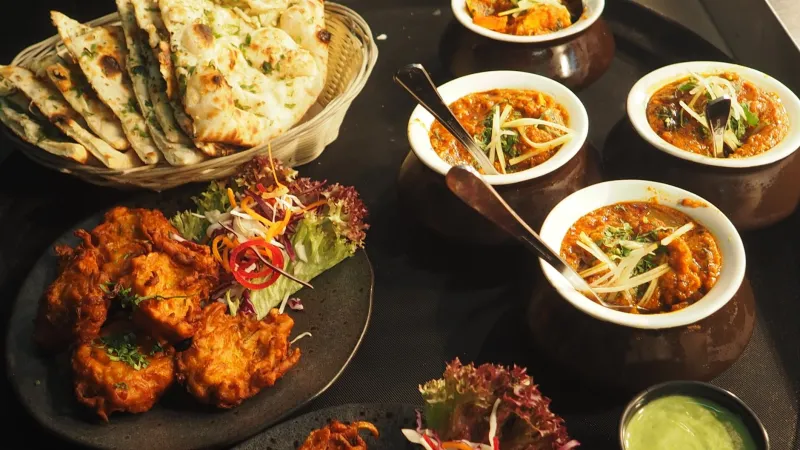
The photograph on the box is extraordinary. The curry is a deep, burnished amber, glossy with what appears to be actual flavour. The rice is separate — each grain distinct, fluffy, individual. There's a sprig of coriander on top that looks like it was placed there by someone who genuinely cares. The naan is golden and pillowy and almost certainly warm.
You follow the instructions. You wait the required time. You open the container.
What you're looking at is not that.
The Art of the Aspirational Box Shot
Food photography for frozen ready meals is a legitimate dark art. The people who do it are skilled, well-equipped, and working with ingredients that bear almost no resemblance to what's actually inside the packet. The curry on the box was probably made fresh, by a chef, with good-quality stock and actual whole spices. The version in the tray was produced at scale in a factory in the East Midlands and has been frozen for somewhere between six weeks and six months.
Nobody is technically lying. The box says "serving suggestion" in a font so small you'd need a magnifying glass and the motivation to use it. But the gap between suggestion and reality is the size of a small county, and we all know it, and we keep buying the things anyway.
This is a judgement-free zone. We've all done it. Some of us are doing it right now.
The Premium End: Paying More for the Fantasy
The upmarket frozen ready meal sector has expanded dramatically over the past decade. Supermarkets have entire ranges built around the promise of restaurant-quality food without the restaurant. The packaging is matte and tasteful. The descriptions are florid. "Slow-cooked pulled pork with a smoky chipotle glaze" sounds genuinely excellent. It costs £4.50 and takes twelve minutes in the oven.
The results, in our informal but enthusiastic testing, were... mixed. Some of the premium options are genuinely decent — not restaurant quality, but honest, filling, and reasonably flavoured. The chicken tikka from one major supermarket's top-tier range, for instance, had actual depth to it. The sauce clung to the meat. The rice was only slightly tragic.
Others, however, were a masterclass in expensive disappointment. A "hand-crafted" lasagne that had clearly been assembled by a machine with no hands whatsoever. A "rustic" Thai green curry that tasted of lemongrass-flavoured sadness. A "proper" beef stew that had the texture of something that had been warm, cold, warm, and cold again more times than it would care to admit.
The premium price, it turns out, mostly buys you better packaging and a more convincing story. The food itself is still frozen food.
The Budget End: Where Honesty Lives
Here's the thing nobody tells you: the cheap stuff is often better. Not better in the sense of tasting like a Michelin-starred meal. Better in the sense of knowing exactly what it is and delivering on that promise without any pretence.
The economy frozen burger that costs 89p is not trying to be anything other than an economy frozen burger. It succeeds at being that. The value-range mac and cheese doesn't claim to be "artisan" or "slow-cooked" — it claims to be mac and cheese, and it is mac and cheese, and sometimes that's all you need at 11pm on a Tuesday.
Some of the budget options we tested were actively impressive. A discount supermarket's frozen fish and chips — the kind of thing that gets sneered at by people who've never actually tried it — came out crispier and more satisfying than a premium version that cost three times as much. The fish was fish. The chips were chips. Nothing was trying to be something it wasn't.
There's a lesson in there about honesty and expectation management that probably applies to life more broadly, but we'll leave that alone.
The Microwave Problem
The packaging always gives you options. Oven or microwave. The oven instructions take longer. The microwave instructions are faster and will, the box implies, produce a similar result.
They will not produce a similar result.
Microwaved frozen meals exist in their own specific category of culinary experience — not bad, exactly, but texturally compromised in ways that are hard to ignore. The pastry that was supposed to be flaky is now soft. The sauce that was supposed to be rich is now slightly rubbery at the edges. The whole thing has the quality of food that has been reheated by someone who gave up halfway through.
And yet. At 1am when you can't be bothered to wait twenty-five minutes, the microwave wins every time. We are all hypocrites. The microwave knows this.
What the Manufacturers Are Actually Doing
Frozen ready meal production involves a series of compromises that are entirely logical from a manufacturing perspective and entirely depressing from a culinary one. Sauces are thickened more than they should be because they need to survive freezing and reheating without separating. Meat is often pre-cooked to a temperature that makes it safe but also makes it slightly grey. Vegetables are blanched before freezing, which removes some of their flavour along with the enzymes that would otherwise cause them to degrade.
None of this is sinister. It's just physics and logistics. But it does mean that no matter how good the base recipe is, the finished product has been through enough processing that the original intention is somewhat muffled by the time it reaches your plate.
The manufacturers know this. The marketing department also knows this, which is why they spend so much money on the box photography.
The Verdict (Such As It Is)
If you're buying frozen ready meals expecting them to taste like the restaurant version of whatever they're imitating, you are going to be disappointed every single time. That's not a failure of the product — it's a failure of expectation management, and the packaging is doing its absolute best to make that failure happen.
Buy the budget versions when you just want something warm and filling and real. Be sceptical of the premium versions that promise the earth and deliver a competent Tuesday dinner. And never, under any circumstances, trust the serving suggestion photograph.
The coriander sprig is not coming with it. It never was.