£6.49 and the Illusion of Choice: How Budget Pub Menus Get Inside Your Head
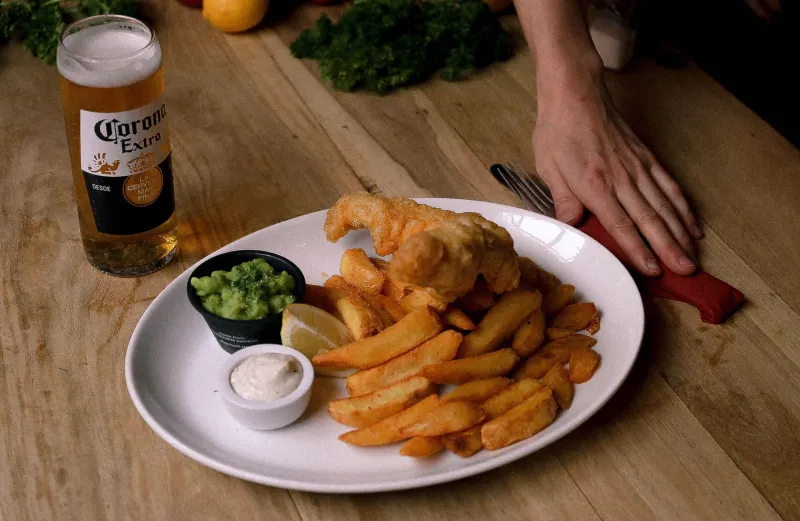
There's a moment, usually around 6pm on a Tuesday, when someone at a table in a budget pub says the words: 'Shall we just do the app?' And without fail, everyone orders more than they meant to.
Nobody discusses it. Nobody notices it. But according to the people who've worked behind the bar and studied the spreadsheet behind the menu, that's exactly the point.
The Calendar That Books Your Week For You
Start with the curry club. Or the steak night. Or the fish Friday. These aren't just promotions — they're scheduling devices. A former pub manager who spent eight years running a large town-centre boozer (who asked to go by 'Dave', because 'the chains still know where I live') explained it plainly.
'The midweek menu isn't there to make Tuesday busy. It's there to make Tuesday yours. Once you've committed to curry club in your head, you're not comparing us to the Italian down the road. You've already booked yourself in.'
The genius is the rhythm of it. Monday club, Tuesday club, Thursday club — a week with structure, like a radio schedule. You don't choose the pub each time; the pub chooses you, again and again, at a price point low enough that deciding feels unnecessary.
Why Everything Ends in .49
Look closely at a budget pub menu and you'll notice prices rarely land on round numbers. £6.49 mixed grill. £8.79 burger. £3.29 for a side of onion rings that exists purely to make the burger look lonely without it.
Dr Amrita Kaur, a behavioural economist who's researched menu pricing for hospitality chains, says the .49 ending does two jobs at once.
'First, the obvious one: we read left to right, so £6.49 registers as "six-ish" rather than seven. But the subtler effect is what it signals. A precise price feels calculated — like someone's done the maths to keep it fair. Round prices feel like a guess. Precision reads as value, even when it isn't.'
Then there's the anchoring. The £14.99 mixed grill at the top of the menu isn't there to be ordered — or rather, it is, but only by a few. Its real job is to make everything beneath it feel sensible. That £6.49 version suddenly looks like a bargain, even though it's the one the margins were built around.
And the sides? 'A menu without small plates is a menu that only sells once per customer,' Kaur says. 'The onion rings aren't a product. They're a second transaction dressed as a treat.'
The App Made Me Do It
Here's the stat that should worry us all: Dave estimates table service apps bump average spend by somewhere in the region of 15%. Kaur isn't surprised.
'Ordering at the bar involves friction — a queue, a person, a moment where you might reconsider. The app removes all of it. You're sitting down, you're comfortable, and the dessert menu is one tap away. There's no social checkpoint where someone might raise an eyebrow at the fourth round.'
The app also quietly restructures the menu. Food first, drinks bundled into meal deals, upgrades suggested at checkout — 'make it large for £1' is the vending machine of the pub world, a decision made in two seconds that you'd never make out loud.
The Regulars Know (And Don't Care)
We took this to the tables of a busy budget pub on a wet Wednesday, and the response was a shrug you could hear from space.
'It's £6.49 for a mixed grill and a roof,' said Mick, 61, retired, not moving. 'If there's psychology in it, the psychology's winning either way.'
His mate Karen was blunter: 'I know the curry club is a trap. I've been in the trap for four years. The trap has naan bread.'
And honestly? That might be the healthiest way to look at it. The menu is engineered, yes — but it's engineered to give you a big plate of food and a seat for less than a tenner, and it tells you exactly which night to come back. Some psychological operations are just… fine.
Next Tuesday, then. Curry club. Obviously.